
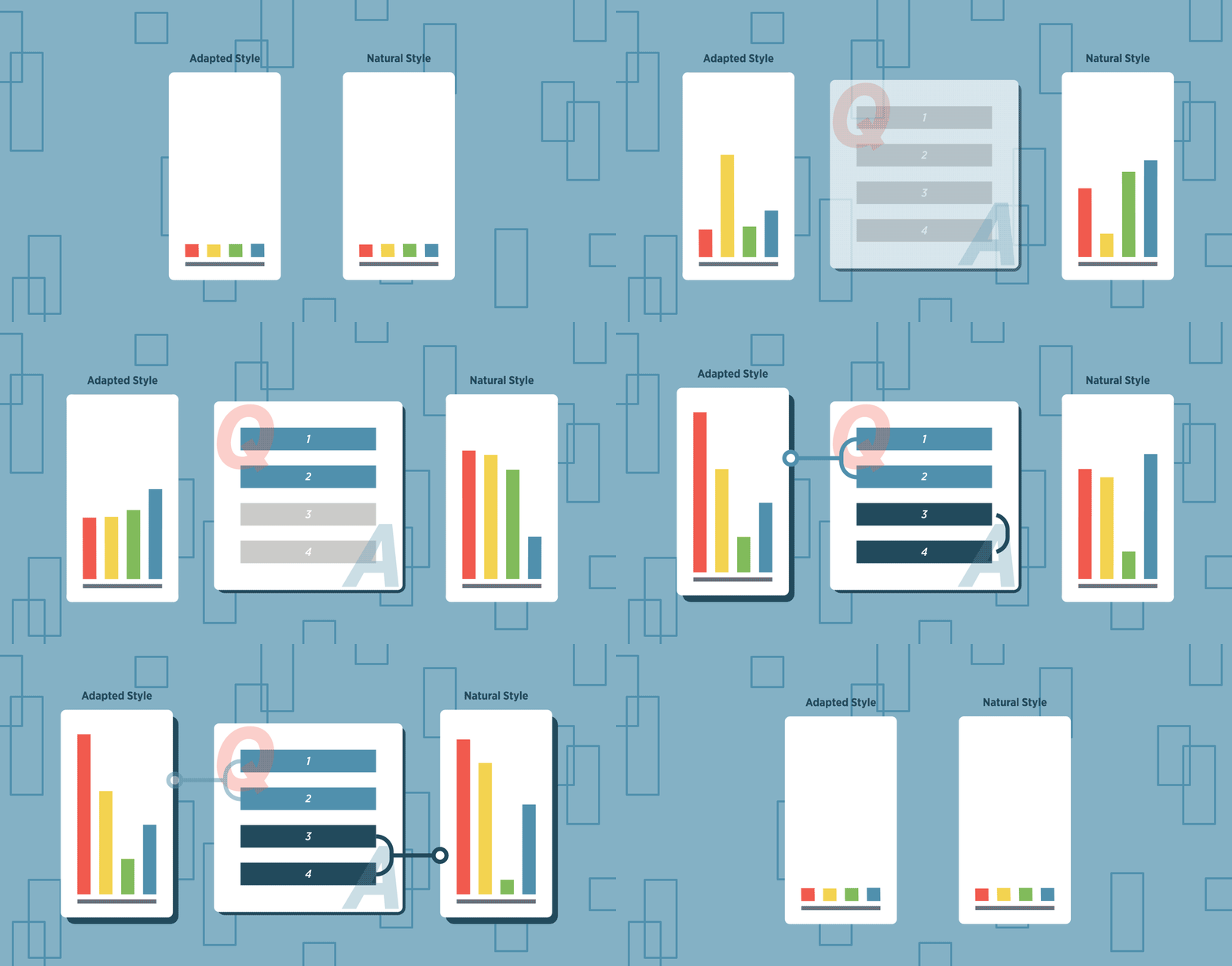
If you’ve ever taken a DISC assessment from TTI, you have seen your results displayed in two graphs, labeled Natural and Adapted. They provide crucial differences between your behavioral patterns. If you’re only looking at a single averaged DISC graph, you’re not getting the full picture of the assessment taker’s behavior.
What Does Natural & Adapted Mean?
The Natural Graph shows an individual’s natural behavior, or how they prefer to do what they do. This score is shown to the right in DISC assessments. 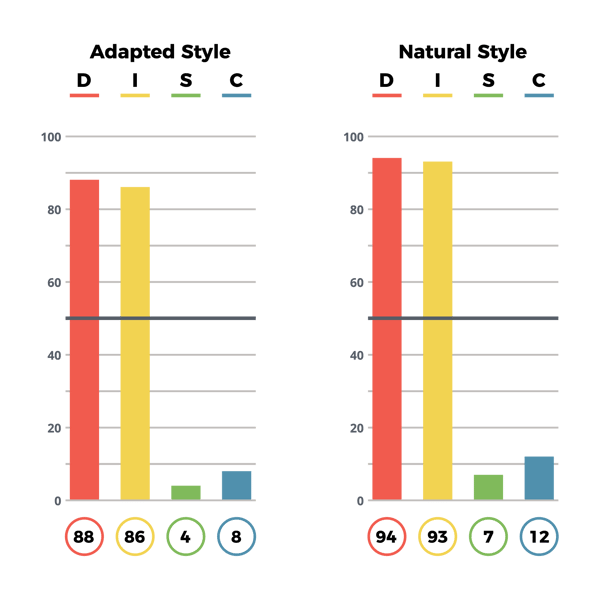 The Adapted Graph shows how an individual adapts their behavior to fit the situation they are in. This score is shown to the left in DISC assessments.
How Does TTI SI’s DISC Assessment Score Answers & Sort Data?
 Our DISC questionnaire contains 96 adjective answers, which are measured in 24 blocks of four response items.
Each of these is aligned with D (Dominance), I (Influence), S (Steadiness) or C (Compliance). The assessment taker ranks these four choices from ‘most like me’ to ‘least like me’. This division in how someone ranks these scores produces both the Natural and the Adapted graphs.
For details on how that process works, check out our White Paper.
Why Does Having Two Graphs Matter?
The most exciting thing about having two graphs is that they can cover both the aspects of acceptance and rejection when reviewing questions in an assessment.
To quote Dr. Ron Bonnstetter’s White Paper, linked above,
“Simply put, DISC behaviors cannot accurately be described using one graph when in fact each of us make decisions that are based on an initial, precognitive, neurological asymmetry that draws upon totally different brain processing of acceptance and rejection. Forced-choice data in a single graph, is analogous to comparing apples and oranges as one thing.”
By creating the Adapted graph from the first two choices participants select in their answer rankings, and the Natural graph from the last two choices they rank, the TTI DISC assessment gets the full picture.
“It also means that when we say we are not something is a stronger reaction and a clearer indicator than when we say we are something,” said Dr. Bonnstetter. “Therefore, scoring a person’s 3rd and 4th choices (least descriptive) actually provided an inverse indicator of who we really are, thus our natural style comes from 3 & 4. Our adapted style then is secondarily processed and provided by scoring our #1 & #2 choices as an indication of our adapted behavior.”
How Can This Information Help You?
 The Natural and Adapted graphs are crucial to your understanding of an individual’s behavior. They reveal how someone adapts to situations outside their comfort zone, like a challenging professional role. People can adapt to different roles, but severe long-term adaptations can cause strain, stress, and even burnout.
When you use both the Natural and Adapted graphs to understand behavior, you can avoid bad hires, create development plans, and better structure job responsibilities.
If all of this information were condensed into one averaged graph, the nuance would be lost. The true patterns of behavior would be dulled. That leads to misunderstandings, poor representation, and unnecessary conflict.
The Natural and Adapted graphs help you see who someone really is, and who they can be, if needed. These insights enable more informed decisions in the workplace.
What’s Your Next Step?
If you’re eager to learn more about DISC, we have the resources you need.
- DISC: What You Need to Know
- Normal, Moderate, Extreme: Each DISC Type Under Pressure
- How to Adapt During Crisis by DISC Behavior
- How to Cheat on a DISC Test
- Natural Versus Adapted DISC Graphs
There’s a reason why DISC is such a popular assessment! The insights it reveals are directly helpful for the workplace and the world at large. Find out how learning the nuances can help you, and pay attention to the Natural and the Adapted behavior in your daily life.



![Don’t Let Your Behavioral Style Haunt You [Infographic]](https://blog.ttisi.com/hubfs/Halloween-Infographic_DontLetYourBehavioralStyleHauntYou_Email_Header.png)