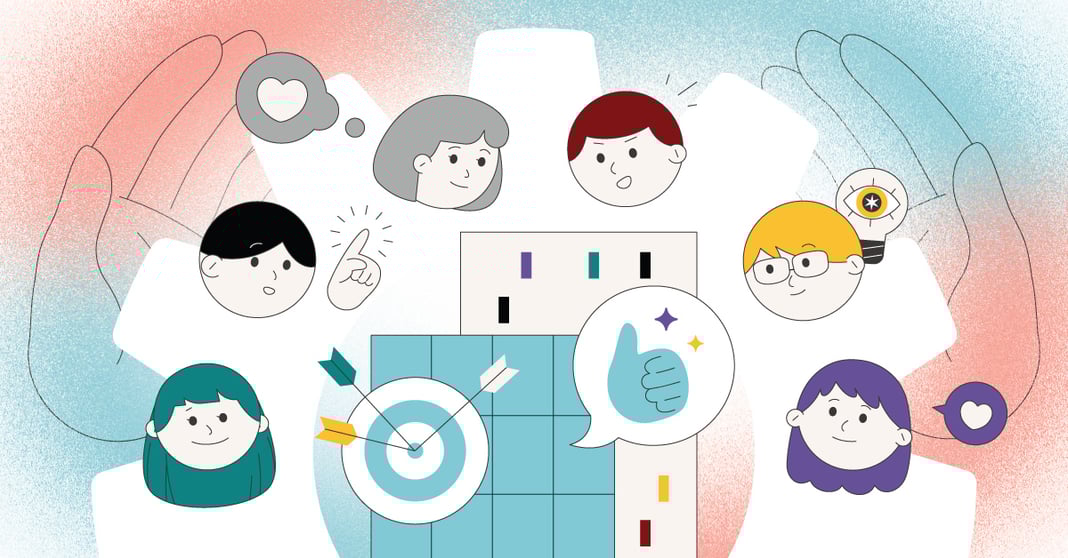
Motivation is a crucial element of team building, but it can be challenging to support and honor each individual on a team if they have different motivations.
The good news? It’s work worth doing: passionate employees are 50% more likely to be evaluated as meeting or exceeding performance expectations compared to their less passionate peers.
Employees aren’t just looking for a paycheck. They’re looking for meaning in their professional lives. That’s why organizations using motivation for sustainable team building are attracting top talent and achieving long-term success.
Don’t wait! Find out what your organization needs to do now to build a passionate, productive team.
Connect Daily Work to a Bigger Purpose
It’s easy to get siloed or sidetracked from the organizational culture if the purpose isn’t clearly expressed. If employees don’t see the results of their work or understand how it contributes to the company's larger purpose, they can feel isolated and disengaged from their team.
The best way to strengthen team building is to emphasize purpose in everything each person does. This requires a strong foundational culture with defined values and purpose, which is another way to attract talent and build teams that matter. The World Economic Forum shared that almost 90% of Millennial and Gen Z workers would leave a job to work somewhere that better matches their values.
“Workers are struggling more than ever before to be motivated and engaged,” said Lindsey Weigle, Managing Partner at Bluewater Advisory. “People need to feel connected to a cause. They aren’t willing to spend their professional lives doing work that doesn’t matter to them.”
By understanding and encouraging individual motivation, you can build a dream team of top talent and loyal employees who are engaged in their work.
Provide Recognition in Ways That Match Individual Needs
The critical thing about aligning organizational purpose with employee motivation is to seek clarity. Don’t try to be all things to all people! Compromising a clear vision makes companies appear weak and unorganized. Stand firm in your company culture and share that vision in everything you do.
While this synergy is essential, it doesn’t mean every team member has to share identical motivations or passions. In fact, diversity of thought can bring enormous benefits to project management, informed decision-making, and energy in team building. The vital thing is to make sure that individuals are recognized in ways that encourage them.
“I was recently coaching a professional who spent 24 years at a company that was recently acquired,” Weigle said. “The company culture changed, as did her role. She wasn’t ready to leave, but she was very unhappy in her role.”
The solution? Re-evaluating her tasks through a different lens: motivation. “We pulled out her drivers and looked historically at what she loved about the position compared with the new workload. We reframed how she viewed her new responsibilities and found how they contributed to her drivers. Looking at her work with a different lens helped eliminate the friction, and she found new meaning in the role.”
While Weigle couldn’t change her client’s job responsibilities, she helped her change her perspective and find new ways to understand her work. If leaders do the same, they’ll improve the engagement and productivity of their teams. By honoring individual passions and tying them into the company’s larger goals, you’ll build a team that’s not just sustainable, but exceptional.
Create Psychological Safety
Psychological safety isn’t just a buzzword; it’s essential for sustainable team building in your organization. When you create an environment where people aren’t afraid to fail or share new ideas, you increase innovation, momentum, and engagement.
That’s because focusing on motivation encourages authenticity. When the organization supports people showing up as themselves for the values they care about, it reduces fear of judgment, leaving employees supported to take risks without worrying that mistakes will diminish their worth on the team.
“As leaders, it would be great to perfectly align every single person with their role, but that doesn’t always happen,” said Weigle. “We can’t always change responsibilities, but working with motivation helps workers re-align with what they’re passionate about, instead of giving minimum effort and energy.”
Focusing on motivation also contributes to trust in leadership, which in turn fosters psychological safety overall. Leaders who acknowledge and align work with employees’ passions demonstrate care for the whole person. That strengthens trust and supports the development of growth mindsets.
When you connect people to purpose, you get the best results. Get started with the right tools.